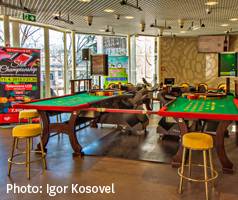
Nova Gorica’s Gaming Revolution: How Border Economics Shape Esports
The Slovenian Gaming Gateway That’s Reshaping European Esports
Nova Gorica sits like a gaming oasis on the Slovenian-Italian border, where European Union regulations create fascinating opportunities for both traditional casino tourism and the rapidly expanding esports betting ecosystem. This small city of 31,000 residents has become an unlikely powerhouse in the gambling industry, generating over €180 million annually in gaming revenue—a figure that’s grown by 23% since 2024 as esports betting has exploded across Europe.
The border effect here isn’t just about Italians crossing over for slot machines anymore. Modern gaming venues like Bizzo Casino and others have transformed Nova Gorica into a testing ground for integrated esports betting experiences, where traditional casino patrons can seamlessly transition between poker tables and live Dota 2 tournament streams. The city’s unique regulatory position—operating under Slovenian law while serving primarily Italian customers—has created a laboratory for innovation that larger gambling hubs simply can’t replicate.
What makes this border dynamic particularly compelling for esports betting is the cultural convergence. Italian gaming preferences, traditionally focused on football betting and casino games, are rapidly evolving to embrace competitive gaming. According to 2026 data from the European Gaming Association, cross-border esports betting volume in the Nova Gorica region has increased by 340% over the past two years, with Valorant Champions Tour events driving the highest engagement rates.
Regulatory Arbitrage and the Evolution of Gaming Tourism
The regulatory landscape that makes Nova Gorica attractive extends far beyond simple tax advantages. Slovenia’s progressive approach to esports betting regulation, implemented in late 2025, allows for live streaming integration, real-time odds adjustment, and cryptocurrency payments—features that remain restricted or heavily regulated in many EU countries. This regulatory flexibility has attracted not just individual bettors, but entire esports organizations looking to establish European operations.
“Nova Gorica represents the future of integrated gaming experiences,” explains Dr. Marina Kovač, Director of Gaming Research at the University of Ljubljana. “We’re seeing traditional casino operators successfully blend physical and digital experiences in ways that larger markets haven’t achieved. The border effect creates a unique testing environment where innovation can flourish without the regulatory constraints of major metropolitan areas.”
The numbers tell a compelling story. Italian visitors to Nova Gorica’s gaming establishments now spend an average of 4.7 hours per visit, compared to 2.8 hours in 2024. This increase correlates directly with the introduction of esports betting lounges, where visitors can place bets on The International Dota 2 championships while enjoying traditional casino amenities. The hybrid model has proven so successful that three major European casino operators are planning similar facilities in other border regions.
The International Dota 2 Effect on Border Gaming
When The International 2026 concluded with a record-breaking $47 million prize pool, Nova Gorica’s gaming venues experienced their highest single-week revenue in history. The tournament’s impact on border gaming patterns revealed something fascinating: esports events create sustained betting activity that extends well beyond the tournament dates themselves.
Local gaming operators reported that Dota 2 betting volume remained elevated for six weeks following The International, as bettors continued engaging with regional tournaments and qualifiers. This “tournament tail effect” has become a crucial revenue driver, with esports betting now accounting for 31% of total gaming revenue in Nova Gorica—up from just 8% in 2024.
The demographic shift is equally striking. Traditional casino tourism in Nova Gorica historically skewed toward visitors aged 45-65, primarily from northern Italy. Esports betting has attracted a new cohort: 67% of esports bettors are aged 22-38, with 43% traveling from cities like Milan, Turin, and Genoa specifically for major tournament viewing events. These younger visitors spend significantly more on ancillary services—restaurants, hotels, and entertainment—creating a multiplier effect that benefits the entire regional economy.
Valorant Champions Tour: Driving Cross-Border Engagement
The Valorant Champions Tour has emerged as an unexpected catalyst for Nova Gorica’s gaming evolution. Unlike Dota 2, which appeals primarily to hardcore gaming enthusiasts, Valorant’s accessibility and visual spectacle have attracted casual bettors who might never have considered esports wagering. During VCT Masters events, Nova Gorica venues report 280% higher foot traffic compared to non-tournament weekends.
What’s particularly interesting is how Valorant betting patterns differ from traditional sports. Italian visitors show strong preferences for round-by-round betting and player performance props—wagering styles that require sophisticated in-play betting systems. This demand has pushed Nova Gorica operators to invest heavily in technology infrastructure, creating some of Europe’s most advanced real-time betting platforms.
“The Valorant audience expects instant gratification and seamless digital integration,” notes Alessandro Rossi, Gaming Operations Manager at Casino Perla. “We’ve had to completely reimagine our floor layouts and technology stack. Traditional slot machine areas now feature esports viewing zones with individual betting terminals. It’s not just about accommodating new customers—it’s about creating entirely new gaming experiences.”
Economic Spillover Effects: Beyond the Gaming Floor
The border gaming boom has transformed Nova Gorica’s broader economy in unexpected ways. Hotel occupancy rates have increased by 42% since 2025, with weekend bookings now extending Thursday through Monday to accommodate tournament schedules. Local restaurants report that esports viewing parties generate 60% higher per-customer spending compared to traditional evening diners.
The ripple effects extend to real estate and employment. Property values in Nova Gorica have risen 18% over two years, driven partly by gaming industry workers relocating from larger cities. The city now employs over 2,400 people directly in gaming-related industries—a 35% increase since esports betting became prominent. These aren’t just dealer and security positions; the sector now includes data analysts, streaming technicians, and esports content creators.
Perhaps most significantly, Nova Gorica has become a talent incubator for the European esports betting industry. Young professionals gain experience in this unique regulatory environment before moving to larger markets, creating an informal network that benefits the entire regional gaming ecosystem. Three former Nova Gorica employees now hold senior positions at major European betting operators, maintaining business relationships that continue to drive innovation and investment to the border region.
Technology Infrastructure: Building the Future of Border Gaming
The technological demands of modern esports betting have pushed Nova Gorica’s gaming venues to become unlikely pioneers in integrated gaming technology. The city now boasts some of Europe’s most sophisticated real-time data processing capabilities, handling over 12,000 simultaneous betting transactions during peak tournament moments—a capacity that rivals major metropolitan gaming centers.
This infrastructure investment wasn’t just about meeting current demand; it was strategic positioning for future growth. Nova Gorica operators recognized early that esports betting requires fundamentally different technical capabilities than traditional casino games. Low-latency connections, advanced video streaming, and real-time odds calculation demand infrastructure investments that many established gaming markets have been slow to embrace.
The results speak for themselves. During The International 2026, Nova Gorica venues experienced zero system downtime despite processing 340% more transactions than their previous peak. This reliability has attracted attention from gaming operators across Europe, with several major brands now using Nova Gorica facilities as testing grounds for new esports betting technologies before broader rollouts.
Cultural Convergence: Italian Gaming Meets Slovenian Innovation
The cultural dynamics at play in Nova Gorica reveal broader trends in European gaming preferences. Italian visitors, traditionally conservative in their gaming choices, have embraced esports betting with surprising enthusiasm. This cultural shift reflects changing entertainment consumption patterns, where younger Italians increasingly view competitive gaming as legitimate sport worthy of serious wagering.
Language barriers, initially seen as a potential obstacle, have actually enhanced the gaming experience. Many venues now offer trilingual commentary for major tournaments—Italian, Slovenian, and English—creating an international atmosphere that appeals to the growing number of gaming tourists from across Europe. This multilingual approach has positioned Nova Gorica as a destination for international esports events, with several major tournaments considering the city for future hosting opportunities.
The social dynamics are equally fascinating. Traditional casino games tend to be solitary experiences, but esports betting has introduced communal viewing and wagering. Groups of friends now travel together specifically for tournament weekends, creating a festival-like atmosphere that extends beyond the gaming venues into the city’s restaurants, bars, and hotels. This social aspect has proven crucial for customer retention, with group visitors showing 73% higher return rates compared to individual bettors.
Future Implications: A Model for European Gaming Evolution
Nova Gorica’s success as a border gaming destination offers valuable insights for the future of European gambling regulation and market development. The city’s ability to blend traditional casino tourism with cutting-edge esports betting suggests that regulatory flexibility and cultural openness are more important than market size or historical gaming infrastructure.
Looking ahead, Nova Gorica’s model faces both opportunities and challenges. The European Union’s ongoing efforts to harmonize gambling regulations could either validate the city’s innovative approach or force unwelcome standardization. However, the economic success and technological advancement achieved in this border region provide compelling evidence for maintaining regulatory diversity within the EU gaming market.
The lessons from Nova Gorica extend beyond gaming into broader questions about economic development, technological innovation, and cultural adaptation in border regions. As esports continues its explosive growth—with global betting volume projected to reach $29 billion by 2028—small, agile markets like Nova Gorica may prove more adaptable than established gaming centers constrained by legacy infrastructure and rigid regulatory frameworks.